
Art Therapy for Children With Anxiety and Depression: Understanding What Their Art May Reveal
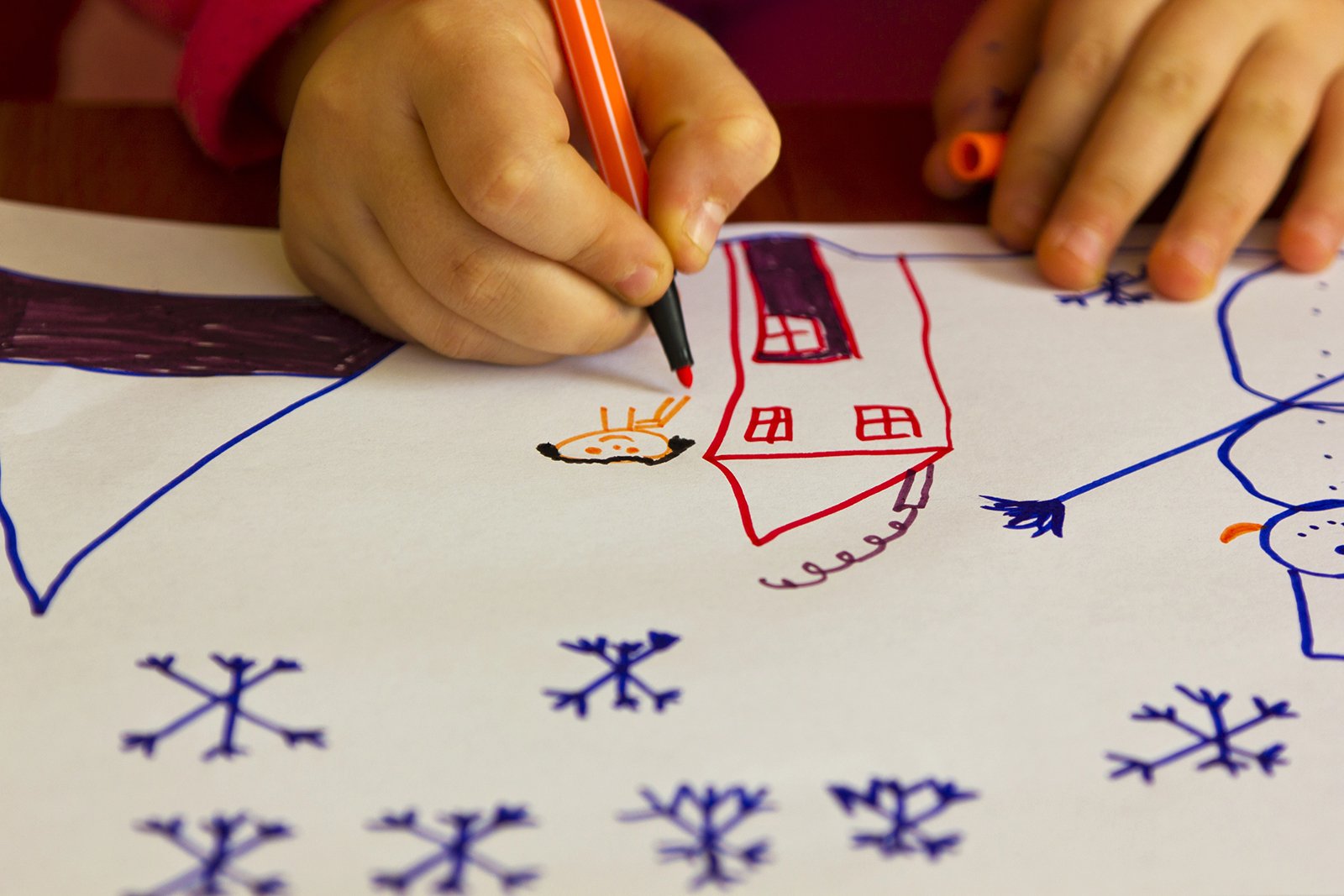
Children often feel deeply, but they don’t have the words to explain what’s happening inside them. Art becomes a powerful language—one that lets their inner world surface gently, safely, and often beautifully. For many children, drawing is not just a creative activity; it’s a window into their emotional experience.
How Art Reveals a Child’s Inner World
Art therapists frequently use projective drawings to help children express what they cannot yet verbalize. By staying within the metaphor of the artwork, therapists can explore feelings without overwhelming the child.
If a child draws a turtle, for example, the therapist might ask, “How do you think the turtle is feeling today?” This indirect approach creates emotional safety, allowing the child to speak freely through the character or scene they’ve created.
One widely used tool is the Kinetic Family Drawing, where the child is asked to “draw your family doing something together.” With access to crayons, colored pencils, gray-scale pencils, oil pastels, and high‑quality paper, children can choose the medium that feels most natural to them.
Throughout the process, the therapist acts as a supportive presence — sharpening pencils, offering more paper, and providing calm encouragement. This role, often described as an auxiliary ego, helps the child feel grounded and cared for.
Understanding Anxiety Through Art
There is no universal formula for interpreting children’s drawings. Symbols are personal, shaped by each child’s unique experiences. Still, certain patterns in how the drawing is executed — not just what is drawn — can suggest anxiety.
Perseveration: Repetitive patterns such as roof tiles, bricks, or tightly repeated strokes of grass may indicate anxious energy. Excessive curly, looping shapes for trees or hair can also reflect perseveration.
Shading and Scribbling: Heavy shading, scribbling, or cross‑hatching may show preoccupation or attempts to control anxious feelings.
Tension in Figures: Figures drawn hanging from ladders, trees, or rooftops can symbolize tension within the family. Leaning or falling figures may also reflect instability or stress.
“Picasso Eye” When one eye is drawn sideways or centered unnaturally on the face, it can represent ambivalence, anger, helplessness, or anxiety.
Stressors in the Sky: Clouds, birds, planes, or wind overhead may symbolize external stressors weighing on the child.
How Depression Appears in Children’s Drawings
Depression in children can overlap with low self‑esteem, but art often reveals subtle distinctions.
Omission or Separation: A child may draw their family on one side of the page and place themselves on the back — or leave themselves out entirely.
Light Pressure and Thin Lines: Drawings made with faint, low‑pressure lines can indicate low energy or sadness.
Small Drawings: Images placed in a corner or drawn very small may reflect feelings of insignificance or invisibility.
Lack of Movement: Figures with drooping shoulders or no indication of action can suggest emotional heaviness.
Limited Color Use: Some children rely solely on gray‑scale pencils or choose only one color, which can reflect a muted emotional state.
The Importance of Context
No single drawing can diagnose anxiety or depression. Art must be understood:
Across multiple sessions
In relation to the child’s overall affect and behavior
Through collaborative exploration with the child
Symbols carry personal meaning, and patterns only become significant when they appear consistently over time.
Seeking Support
If you are interested in meeting with an art therapist, our office is currently scheduling appointments for Fridays and Saturdays beginning in November. Art therapy can offer children a gentle, expressive, and deeply supportive way to explore their emotions.

About Tamara O’Shea, MAT, LAMFT
Helping individuals and couples feel whole and connected to those they love. Tamara is available in Midland Park, Bloomfield and telehealth.